Balance in Running: Why Symmetry Matters (And How to Measure It)
This article explains how AiKYNETIX measures running symmetry (Balance %), and how coaches and clinicians can use this metric to guide training and rehabilitation.
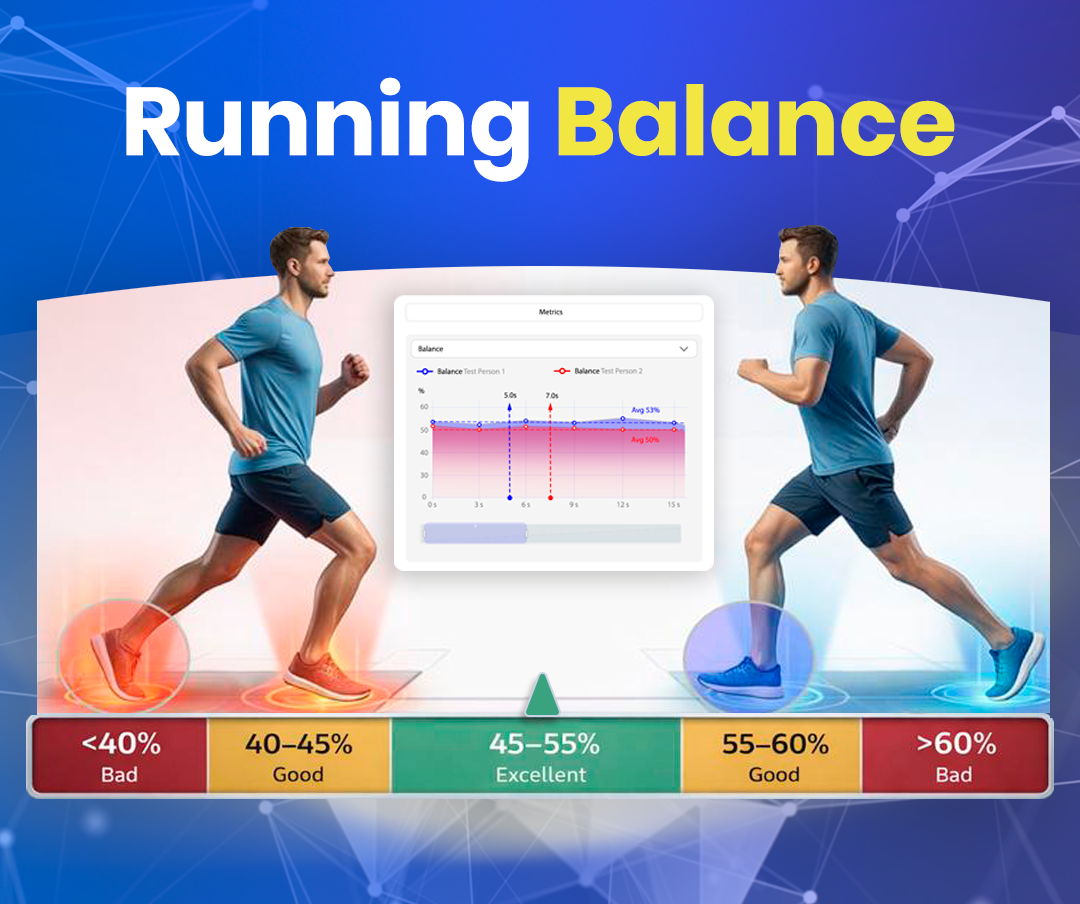
Executive Summary
Balance (%) in AiKYNETIX reflects how evenly a runner distributes ground contact time between the left and right leg. When one side spends more time on the ground, it can signal compensation, asymmetry, side dominance, or reduced movement efficiency. Balance is not just a descriptive metric — it’s a practical screening tool that helps coaches and clinicians decide when a runner may need closer review, targeted exercise, or longitudinal monitoring.
Why This Matters
Running is a repeated single-leg activity. Every stride requires force acceptance, stabilization, and propulsion. Small left-right differences can accumulate over thousands of contacts, which is why a clear symmetry indicator is useful in both performance and rehabilitation settings.
Research shows that up to 92% of runners experience some form of lower limb injury from running . The most common sites are the knee, lower leg, foot, and upper leg. Many of these injuries are related to overuse, and many are preventable if asymmetry is caught early.
What Research Says About Running Asymmetry
Scientific studies have established clear links between asymmetry and injury risk:
- High school cross-country runners with a reach distance difference of 4 cm or more on functional balance tests were five times more likely to incur a running-related injury .
- Trunk muscle fatigue increases asymmetry between dominant and non-dominant legs, which may increase injury risk in novice runners . This means core endurance matters for maintaining good form.
- Runners with current injuries show greater side-to-side differences in foot rotation (~34%) compared to healthy runners (~24%) . Asymmetry decreases as runners recover, making it a useful marker for return-to-readiness.
- A large study of 800+ recreational runners found that while some asymmetry is normal, leg length discrepancy and body composition were determinants of measurable asymmetry .
The takeaway? Some asymmetry is normal, but excessive or persistent asymmetry deserves attention.
What Balance (%) Measures
AiKYNETIX Balance is best interpreted as a left-right contact-time symmetry metric. It reflects whether a runner spends a comparable amount of ground-contact time on both legs or whether one side remains on the ground longer than the other.
A balanced score (around 50%) does not mean every part of the gait cycle is perfect. It means the runner is closer to distributing stance time evenly. A shifted score indicates that one side may be taking more of the stabilization burden, accepting load differently, or compensating for weakness, discomfort, or habit.
The Biomechanical Meaning of Asymmetry
Longer contact time on one side can mean the runner is lingering on that limb to stabilize, absorb force, or protect the opposite side. In practice, this may be associated with:
- Side dominance
- Previous injury
- Reduced confidence in one limb
- Coordination issues
- Fatigue
Because AiKYNETIX uses contact behavior as part of its broader biomechanics model, Balance becomes more valuable than a simple visual impression. It translates movement into a measurable left-right loading tendency that can be tracked over time.
How AiKYNETIX Measures Balance
The platform analyzes running videos from a standard smartphone camera. It tracks when each foot contacts the ground and calculates the percentage of total contact time attributed to the right foot.
Example: If a runner spends 480 milliseconds in contact with the right foot and 520 milliseconds with the left foot over several strides, the Balance score would be approximately 48% — leaning slightly toward the left side.
This calculation happens automatically in under a minute, with no sensors or lab equipment required .
Fig 1. The Balance metric shows the percentage of ground contact time on the right foot - lower scores mean more time on the left, higher scores more on the right.
Balance Interpretation Guide
The table below converts the Balance score into practical coaching language. Lower scores indicate more time on the left leg. Higher scores indicate more time on the right leg.
| RANGE | RATING | INTERPRETATION | RECOMMENDED FOCUS |
| <40% | Poor | More time spent on the left leg. May indicate left-side overcompensation or reduced trust in the right side. | Single-leg control work, right-side strengthening, controlled step-downs, repeat testing. |
| 40-45% | Good | Mild asymmetry with tendency toward left side. Often acceptable short term, but worth monitoring. | Continue balance work, add dynamic stability drills like walking lunges and split-stance control. |
| 45-55% | Excellent | Most symmetric range. Left and right contact behavior is comparatively even. | Maintain through regular balance, mobility, and core-stability work. |
| 55-60% | Good | Mild asymmetry with tendency toward right side. Monitor under fatigue or higher training load. | Continue balance training, strengthen left-side control where needed. |
| >60% | Poor | More time spent on the right leg. May indicate right-side overcompensation or reduced trust in the left side. | Single-leg control work, hip and trunk stability, left-side strengthening, follow-up testing. |
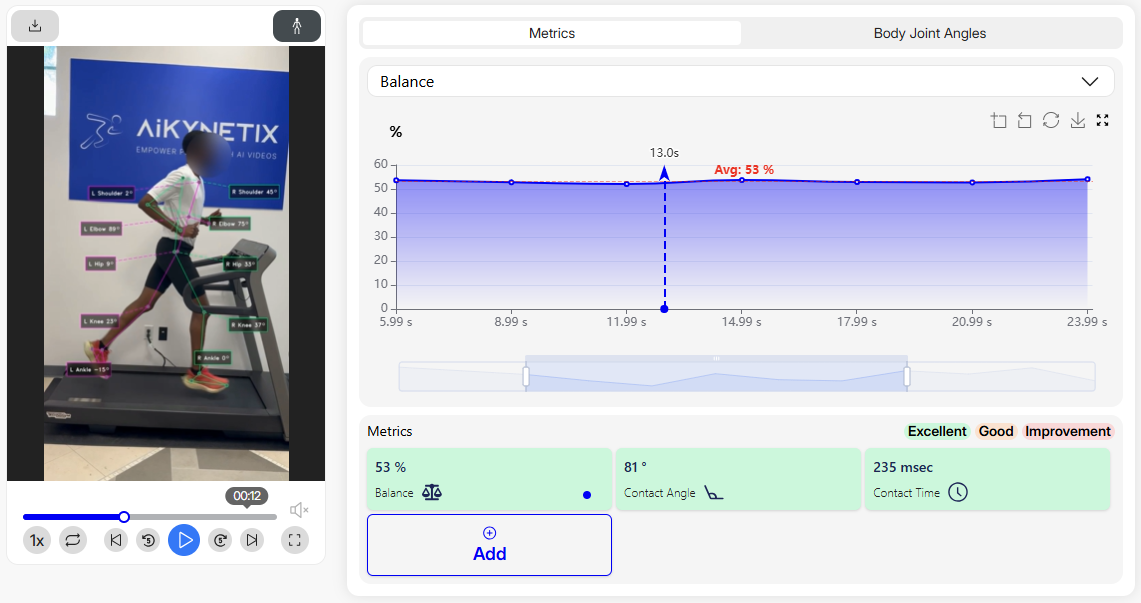
Fig 2. A runner with a Balance score of 53% shows more ground contact time on the right leg.
What Balance Can Reveal
- Post-injury protection or offloading
- Side-to-side weakness or instability
- Fatigue-related asymmetry
- Reduced running efficiency
- Uneven force acceptance strategies
How to Improve a Shifted Balance Score
- Single-leg balance drills and supported holds
- Walking lunges and split-stance transitions
- Hip and trunk stability work
- Weaker-side strengthening
- Repeat testing to confirm whether symmetry is improving
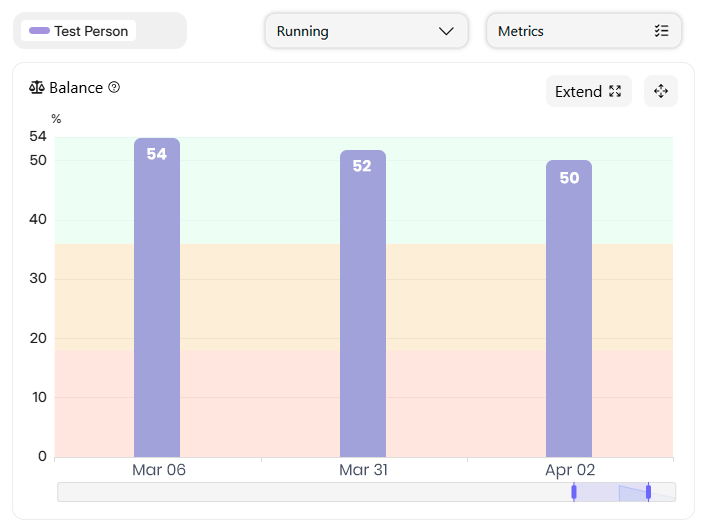
Fig 3. Tracking Balance across multiple sessions helps quantify improvement.
Why Balance Is Strategically Valuable
Balance helps AiKYNETIX communicate one of its strongest differentiators: the platform does not stop at visualizing movement. It interprets measurable behavior that practitioners can connect to coaching, rehab progress, and movement quality.
This matters commercially as well as clinically. A clear metric such as Balance is:
- Easy to explain
- Easy to trend over time
- Easy to convert into recommendations
That makes it especially useful for coaches, clinicians, and B2B partners who need outputs that are technically credible but still simple to communicate.
Practical Use Cases
In sports performance: Balance can detect asymmetry trends before they become obvious in performance decline. A coach might notice a runner's Balance score drifting from 52% to 58% over several weeks — before the athlete feels any pain or notices a drop in speed.
In rehabilitation: Balance can support return-to-run decisions by showing whether stance behavior is becoming more symmetric over time. A physical therapist can use Balance scores to document progress and justify return-to-sport clearance.
In general running analysis: Balance can be paired with cadence, contact time, stride measures, and movement quality to build a more complete picture of running mechanics.
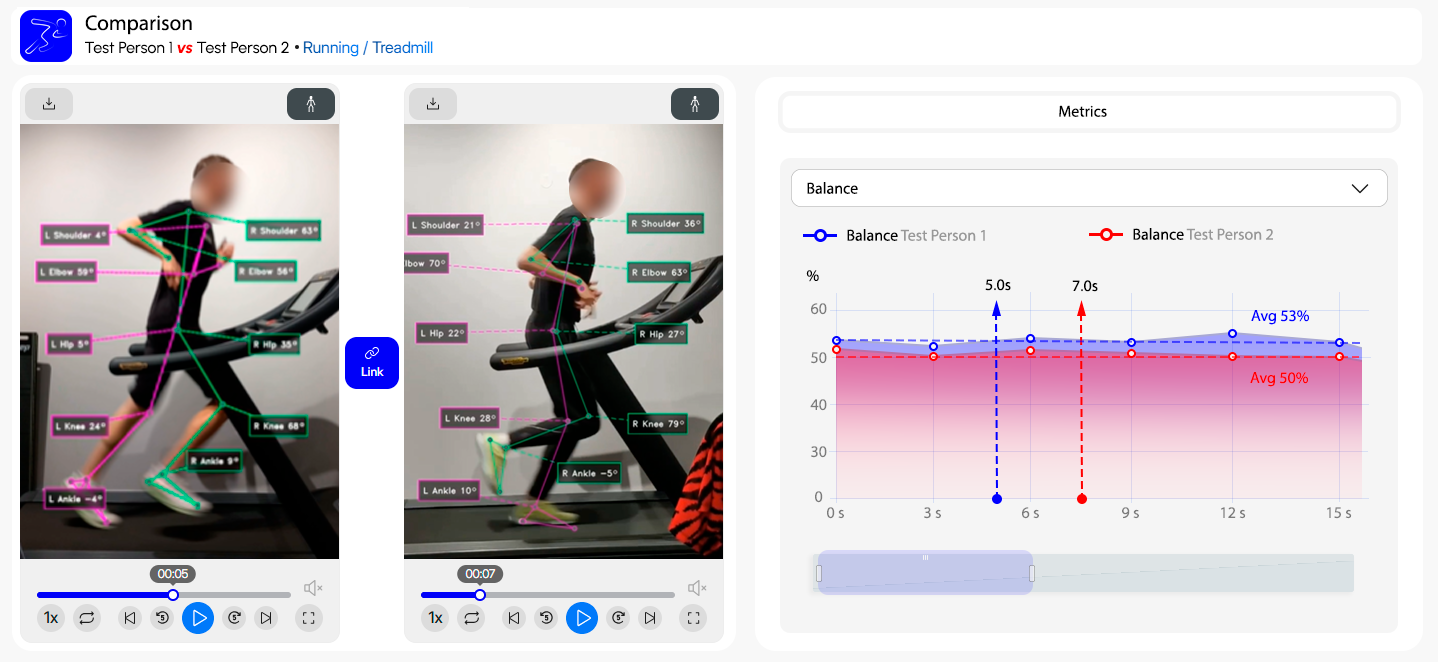
Fig 4. Comparing two sessions side-by-side shows how Balance changes after intervention.
Final Takeaway
AiKYNETIX Balance (%) should be understood as a running symmetry metric grounded in left-right ground-contact behavior. When the score drifts too far below or above 50%, it suggests the runner may be compensating, favoring one side, or losing efficiency.
That makes Balance useful not only for movement description, but also for better coaching, smarter follow-up, and more targeted intervention.
AiKYNETIX transforms a simple smartphone video into objective symmetry data - helping runners and coaches identify imbalances before they become injuries.
Want more tips like this?
📬 Subscribe to our newsletter for more practical guides!
📊 Start your free trial at aikynetix.app
📥 Got questions? Drop us a line: info@aikynetix.com
Find us in the socials:
Facebook | Instagram | X | Telegram | LinkedIn | Strava | YouTube